
 Share
SharePrevious annual reviews
Access all previous MRS annual reviews.
A statement from Jane Frost CBE, Chief Executive

As MRS marks its 80th anniversary, this year’s annual report provides an opportunity not only to reflect on our achievements, but also to recognise the resilience, innovation and commitment that continue to define our profession.
The past year has unfolded against a backdrop of economic uncertainty, geopolitical instability and rapid technological change. Yet throughout these challenges, the research, insight and analytics sector has continued to demonstrate its value, helping organisations make better decisions in an increasingly complex world.
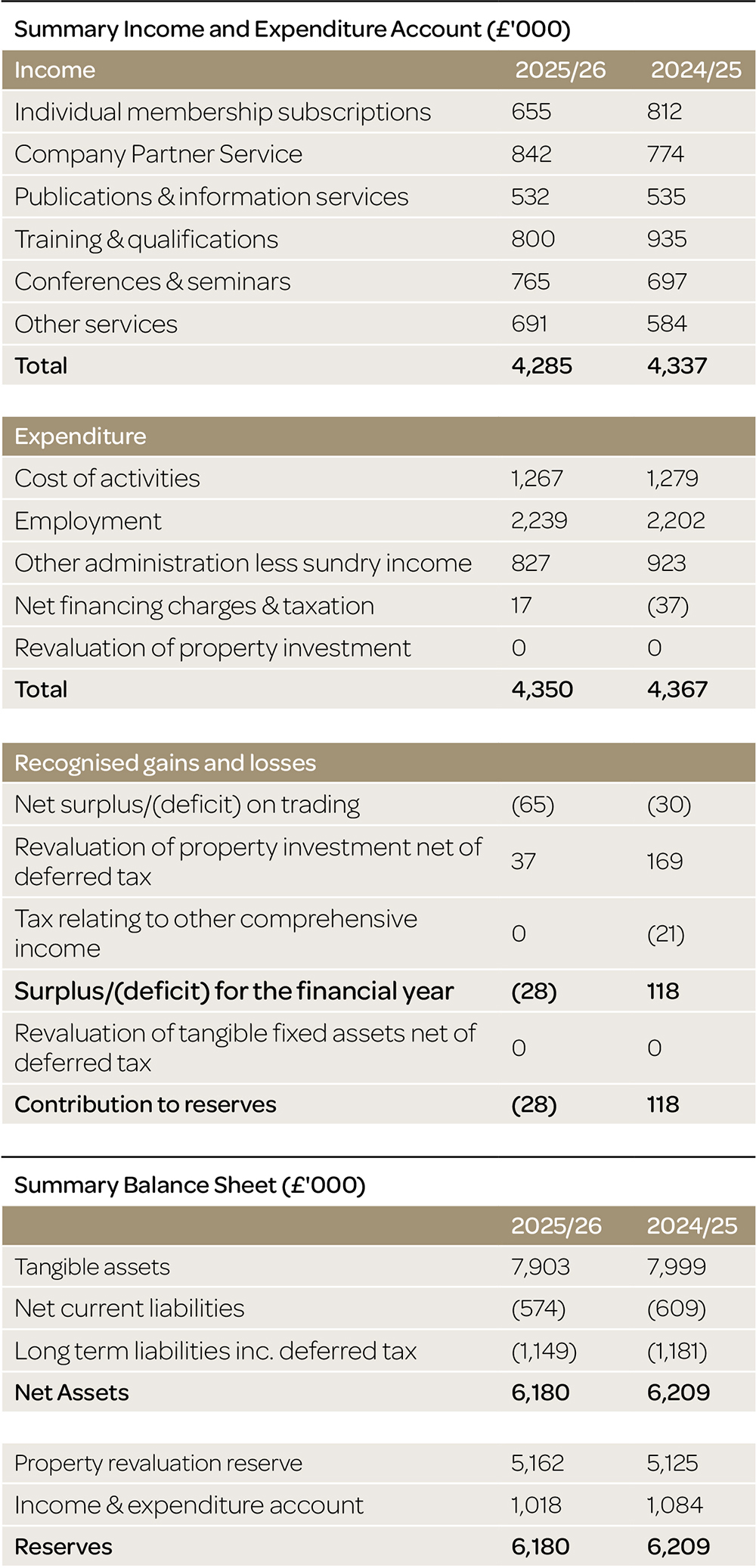
That resilience is reflected not only across the wider sector but also within MRS itself. While facing difficult trading conditions, MRS delivered income of £4.29m during 2025/26, supported by strong performances from Company Partnership, publications, conferences and commercial events. This strong financial position enables us to support members and partners while continuing to invest in areas that matter most to the profession, including data quality, AI, training, standards and digital transformation.
One of the most encouraging developments this year has been the continued growth of our Company Partner community. We welcomed 45 new Company Partners, including agencies, client organisations and specialist providers, with 13 joining as International Affiliates. Organisations including Sage, Specsavers and Nationwide Building Society became Company Partners during the year, while our international reach expanded further into markets including China, Sweden and the Netherlands.
Our individual membership community also remains at the heart of everything we do. This year we celebrated the loyalty and contribution of 425 long-standing members by upgrading them to Certified Member status as part of our 80th anniversary celebrations. Across mentoring, professional development, webinars, networks and special interest groups, thousands of members continue to learn, share expertise and support one another.
We have also continued to invest significantly in skills and professional development. More than 1,250 individuals participated in MRS training programmes during the year, with new courses addressing some of the most important developments affecting our sector, including AI, synthetic data and advanced analytics. We remain committed to helping practitioners develop the capabilities needed to thrive in a rapidly changing environment.
The wider market also has much to celebrate. Our landmark Business of Evidence 2026 report highlighted the growing importance of research, insight and analytics to the UK economy, estimating that the broader evidence sector now contributes £18.74bn in gross value added and supports approximately 350,000 jobs.
These figures underline what those within our profession have long understood: evidence and insight are not simply valuable business tools; they are essential foundations of economic growth, productivity and better decisionmaking.
Our events programme also went from strength to strength during the year. The MRS Annual Conference 2026 sold out, attracting more than 650 delegates from across the research, insight, analytics and media communities, while our programme of 14 one-day conferences and forums attracted more than 1,000 delegates and speakers.
Notably, our AI in MR conference became the most successful one-day event ever hosted by MRS, underlining both the appetite for innovation and the sector’s commitment to understanding the opportunities and challenges presented by emerging technologies. Alongside this, the MRS Awards continued to grow in stature and influence, with the 2026 awards programme achieving its highest levels of engagement and participation to date, reflecting the outstanding quality of work being delivered across our profession.
As we look ahead, MRS remains focused on supporting our members, protecting professional standards, championing the value of evidence, and helping the sector navigate profound technological, social and regulatory change. The opportunities before us are significant, but only if we retain our professional skills and concentrate on the possibilities that outcome based thinking can generate .Two waves of technical innovation , DIY research and big data have come and gone and the sector has grown as a result .
The AI wave is reshaping the market as we know it , but we can still come out on top if we redefine and redeploy our professional expertise and own the AI product rather than leaving it to the technologists. By working together, we can ensure that research continues to play a vital role in helping organisations, governments and society make more informed decisions for the future.
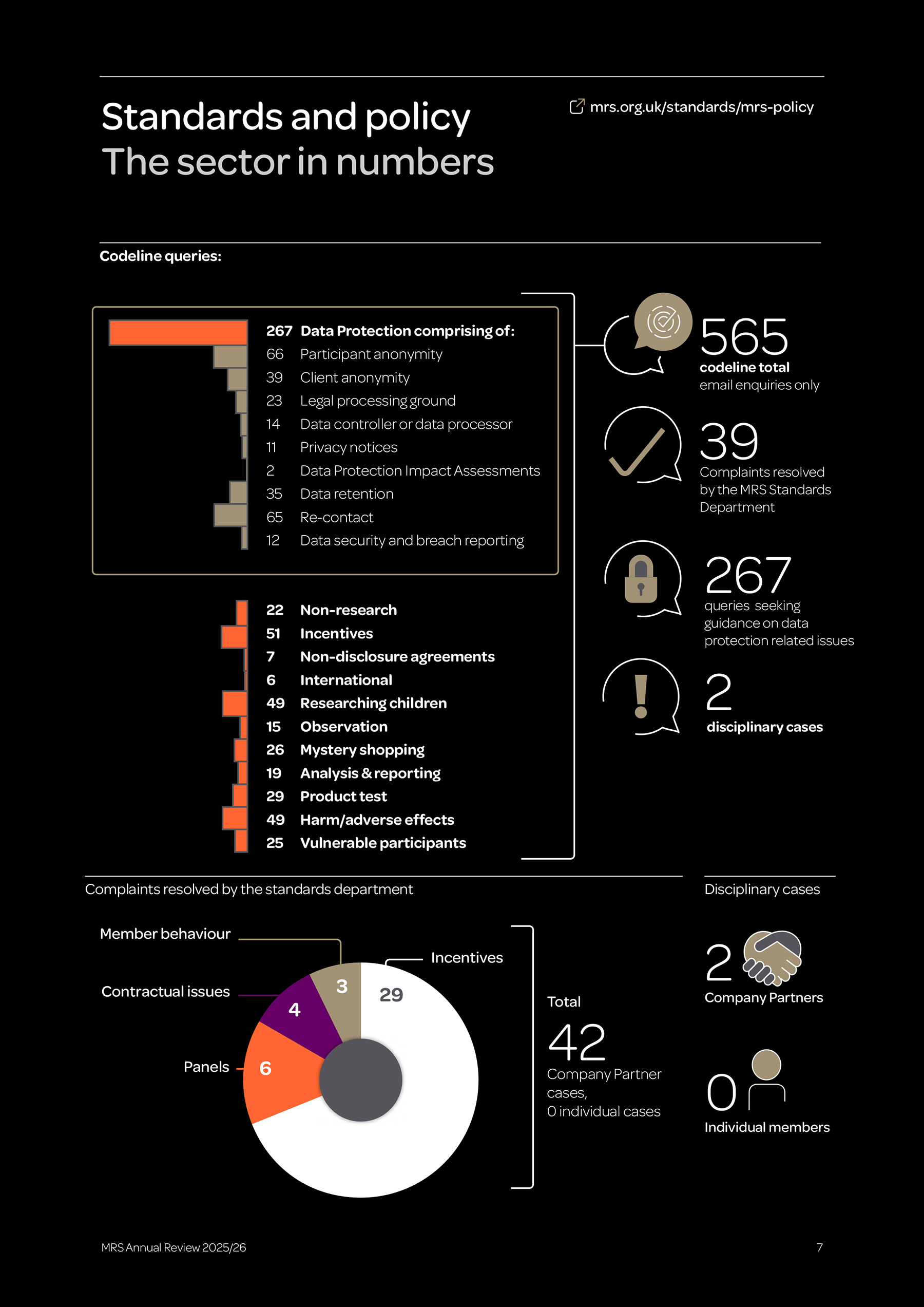
The Data (Use & Access) Act 2025 received Royal Assent during the year, providing greater clarity on the application of data protection law to scientific research. MRS made representations to DSIT during the Bill’s passage, arguing against additional public interest tests that could have created unnecessary uncertainty, delay and compliance burdens for research organisations, particularly SMEs.
Following Royal Assent, MRS continued to liaise with the ICO on the implementation of the Act, including the application of the new scientific research provisions. MRS agreed to share research case studies with the ICO to inform forthcoming updates to the ICO’s Research Provisions guidance and expansion of its Anonymisation guidance and also responded to the ICO’s biometrics guidance consultation.
Internationally, MRS worked through EFAMRO to engage with the Irish Data Protection Commission on GDPR and AI, including the challenges of defining controllers and processors and the interaction between GDPR and the EU AI Act. MRS also supported EFAMRO’s response to the European Commission’s Digital Omnibus package, making the case for greater alignment between regulatory frameworks and a common framework for scientific research.
This activity sits within a wider shift in digital regulation. In the UK, the Data (Use & Access) Act 2025 reflects the Government’s intention to support responsible innovation, data sharing and scientific research while retaining high data protection standards. In the EU, the Digital Omnibus proposal seeks to simplify and align parts of the digital rulebook across data, AI and cybersecurity, including targeted amendments to the GDPR, ePrivacy rules, the Data Act, the NIS2 Directive and the AI Act. For MRS, the priority is to ensure that simplification does not inadvertently narrow the space for legitimate research or create uncertainty around scientific research, data quality, controller and processor responsibilities, or AI-enabled methods. Working through EFAMRO, MRS submitted consultation responses and engaged with EU stakeholders to seek clarity and refinements that would strengthen the position of European research activities.
MRS’ wider European public affairs activity also included responses to the Digital Fairness Act and the European Union Data Strategy, with a consistent focus on ensuring that action to address digital harms, dark patterns and the data economy does not unintentionally restrict responsible research techniques.
MRS also supported specialist standards work through the EPHMRA service contract, including activity to update the EPHMRA Code and supporting webinars for healthcare research audiences. This work extended MRS’ standards expertise into specialist research contexts where ethical, data protection and methodological requirements are particularly important.
Theme 1
AI and research
During 2025/26, MRS continued to support the responsible development and use of AI in research. Through EFAMRO, MRS contributed to the EU AI Office’s Generative AI Code of Practice, which was published in July 2025 as part of the implementation of the EU AI Act. MRS’ focus throughout this work was to ensure that the new requirements are practical, proportionate and capable of being implemented by organisations of different sizes and operating models.
MRS’ AI activity also focused on emerging operational and ethical risks for research. This included updating the MRS Guidance on Using AI and Related Technologies, plus investigating the potential impact of AI bots and agents completing surveys and considering whether there is scope within Ofcom’s regulatory framework to prevent or mitigate activity that could undermine data quality, participant trust and confidence in research outputs.
The MRS Advanced Insight & Analytics Council also published practical resources for members, including a Data Analysis and AI toolkit covering the basics of using AI and a separate paper on Systemic Inclusion by Design.
MRS also continued to connect data quality activity with AI and synthetic data. MRS as a founding partner of GRBN hosted a successful webinar on synthetic data in research in July 2025.
MRS also supported wider sector debate on AI and ethics, including participation in EPHMRA activity on AI and research ethics. This work complemented MRS’ broader standards activity by helping specialist healthcare research communities consider how existing ethical principles apply to new technologies and data-driven methods.
Theme 2
Government statistics, face to face data collection and the future of the census
MRS and the MRS Census & GeoDems Group (CGG) maintained a sustained programme of engagement on the future of UK population statistics and the 2031 Census throughout 2025/26. Following earlier concerns about the potential shift away from a questionnaire-based census towards administrative data, MRS and CGG continued to make the case that the census remains the gold standard foundation for representative sampling, small-area analysis, longitudinal comparability, service planning and evidence-based commercial and public policy decision-making.
In July 2025, the UK Government announced its support for the recommendation that a Census should take place in England and Wales in 2031, with statistical bodies in Scotland and Northern Ireland reaching similar decisions. This was a significant outcome for MRS and CGG, reflecting the central argument made throughout the year that administrative data should complement, rather than replace, the Census unless and until any alternative approach can demonstrate equivalent coverage, quality, granularity and comparability.
MRS and CGG also engaged with wider scrutiny of the UK statistical system. In response to the Public Administration and Constitutional Affairs Committee inquiry into the UK’s Statistics Authority and the Devereux Review of ONS performance and culture, MRS and CGG called for a more open, collaborative and transparent process for implementing reforms. The MRS and CGG response emphasised the need to restore confidence in official statistics through stronger governance, clearer accountability, enhanced data quality controls, realistic strategic planning and sustained investment in ONS’ field force, response rates and data collection methods.
MRS and CGG subsequently wrote to ONS’ new Permanent Secretary and Acting National Statistician to welcome the renewed focus on statistical quality and user confidence, while underlining the importance of active engagement with external users. The correspondence encouraged ONS to publish a clear Census readiness plan, including milestones, dependencies and risks, and to involve user groups such as MRS CGG formally in the governance of Census 2031 preparations.
A particular focus was the continued availability of the census variables needed to produce the Approximated Social Grade. ASG, developed by MRS and CGG and applied to the 2001, 2011 and 2021 Censuses, is now an established and essential census output used across market, media, opinion and social research. MRS and CGG argued that certain census variables must be preserved if ASG is to be produced for 2031.
MRS and CGG also highlighted opportunities to improve ASG in 2031, including the potential use of income data or administrative data from sources such as HMRC and DWP to strengthen classification for older household reference persons. The MRS and CGG topic consultation response supported the inclusion of income as a new census topic, noting that it would be a valuable variable for research, media planning and commercial decision-making and could help improve or extend ASG coverage.
The MRS and CGG consultation responses also set out the sector’s need for consistent and comparable outputs across the four UK nations. MRS and CGG stressed that many research clients require GB or UK-level analysis, making alignment between Scotland, England and Wales, and Northern Ireland essential. They also emphasised the importance of granular geographies, particularly output areas, which are critical for representative sampling, small-area modelling, MRP analysis, media currencies and local decision-making.
In responding to the Scotland and England and Wales topic consultations, MRS and CGG made the case for retaining a wide range of topic areas used by the research sector, explaining how this data supports representative research. MRS and CGG also responded to ONS’ prioritisation decisions, raising concerns about the impact of reductions or changes to statistical outputs on researchers and businesses.
Alongside formal consultation activity, MRS convened a number of roundtables with ONS, ESRC and large data collection organisations on the challenges facing large-scale face-to-face data collection. These discussions considered potential areas for collaboration, including how the sector can respond to declining response rates, rising delivery costs and the need for more resilient data collection infrastructure. This work linked directly to MRS’ wider position that official statistics should draw on the expertise, field capacity and innovation of the wider research sector where this can improve quality, efficiency and public confidence.
MRS also undertook important work on Standard Industrial Classification and social grade. MRS responded to ONS’ first consultation stage on proposed changes to the UK Standard Industrial Classification, proposing extensions to classifications most frequently used by research businesses. In parallel, MRS working with JICPOPS and sector volunteers began the update to the MRS social grade job directory, last updated in 2010, by adding new roles, amending others and reviewing the application of social grade. The aim is to align social grades with current Standard Occupational Classifications and ensure the directory reflects contemporary research practice once the update is completed in 2026/27.
Theme 3
Telephone research
Telephone research remained an operational and policy priority during the year. Following the MRS and Ofcom webinar in April 2025, MRS continued discussions with Hiya, the caller ID and spam blocking service, about the impact of call blocking and call labelling on legitimate research calls.
MRS arranged for volunteer telephone units to have their calls analysed by Hiya to test whether tagging or algorithmic issues were adversely affecting research calls. The analysis found that high call volumes and repeated contacts to the same numbers were contributing to research calls being flagged as spam.
MRS submitted a response to Ofcom’s consultation on tackling spam calls, highlighting the operational and ethical risks created when legitimate research calls are blocked indiscriminately. MRS recommended that Ofcom consider a clear framework for distinguishing legitimate research calls from fraudulent activity, an accreditation pathway for vetted research providers and transparent redress mechanisms where call blocking is applied incorrectly.
Through EFAMRO, MRS also helped to broaden the discussion on telephone research restrictions across Europe, including hosting EFAMRO meetings and open discussions on the impact of call blocking technology on research activities and the need for proportionate approaches that protect the public without undermining legitimate research.
Theme 4
Data quality
Data quality remained a major priority for MRS during 2025/26. Building on the Global Data Quality (GDQ) initiative launched in 2023, MRS worked with GDQ partners, GRBN, SampleCon and other national and international associations to develop practical tools, shared benchmarks and guidance addressing fraud, poor-quality sample, bot activity, synthetic data and AI-related risks.
A key achievement was the launch of the GDQ Project Level Feedback Loop, developed by MRS with SampleCon creating an industry standard code frame for data quality. The feedback loop provides a consistent way for research organisations, sample suppliers and buyers to classify and communicate the reasons why records are removed, reversed or flagged as quality failures. It was launched with a webinar at the end of January 2026 and is intended to support more transparent, comparable and actionable project-level feedback across the sample ecosystem.
The GDQ Data Excellence Quality Pledge also continued to grow strongly during the year. More than 270 companies had signed the Pledge by early 2026, committing to uphold rigorous data quality standards, provide transparency, protect participant experience and rights, support education and collaboration, and participate actively in GDQ initiatives.
The evidence base for data quality also expanded. The second and third rounds (wave 1 and wave 2) of the GDQ benchmark study were completed during the period. The benchmarks covered pre-survey removals, in-survey fraud and poor behaviour terminations, abandon rates, device type, secure link use, post-survey cleanout and total removal rates, providing a more global and detailed picture of data quality challenges across study types.
GRBN and GDQ also progressed the Online Sample Buyers’ Sentiment Survey. The first wave (wave 0) highlighted higher satisfaction among B2C buyers than B2B buyers and showed that satisfaction with online sample was driven more by speed and price than by quality. Two further waves of the research was completed during 2025/26 and the results were presented through GDQ and GRBN webinars, reinforcing the need to rebalance expectations around price, speed and quality in online research.
MRS and GDQ continued to develop guidance and practical resources for the sector. New guidance on data quality considerations for qualitative research, undertaken in partnership by GDQ partners MRS, AQR and QRCA, was finalised during the year, addressing the specific fraud, participant authenticity and process integrity risks affecting qualitative methods. MRS also worked with GDQ partner CRIC to combine draft post-survey data cleaning guidance with MRS material on the same topic, creating a more comprehensive resource on post-fieldwork cleaning and quality review which is due to be published in the forthcoming period.
The GDQ resource base was also reviewed and maintained, with updates to the GDQ data quality glossary reflecting new terms from the other GDQ resources issued in the period. Throughout the year, MRS also used GDQ outputs to support wider work on research fraud, procurement and standards. MRS continued its discussions with the City of London Police and the Home Office to have research fraud recognised as a crime. Work also continued on understanding third-party quality and technology solutions and on developing approaches to measure the impact of data fraud, supporting MRS’ longer-term objective of strengthening recognition of research fraud as a serious issue affecting evidence quality and trust.
Client engagement became a more prominent part of the MRS data quality programme. MRS launched a new Client-side Data Quality Forum through the Senior Client Council in December 2025, with a second meeting held in February 2026. The Forum focuses on helping client-side practitioners navigate GDQ resources, understand the right questions to ask agencies and sample suppliers, and develop practical client-side approaches to improving research data quality.
Together, these activities positioned MRS and GDQ as central convenors of international action on research data quality, strengthening the sector’s evidence base and practical guidance while helping buyers, suppliers, platforms and client-side teams protect the integrity and credibility of research data.
Theme 5
Inclusion, access and representation in research
The Standards team continued to update MRS guidance to support inclusive, accessible and transparent research practice. New MRS Best Practice Guide on Accessible Data Collection was issued during the year, following work undertaken in readiness for the implementation of the EU Accessibility Act and engagement with the Government Statistical Service (GSS) Harmonisation project.
MRS also responded to the GSS consultation on proposed changes to the ethnic group harmonised standard, ensuring that the research sector’s perspective was reflected in the development of statistics standards used across government and public bodies. This complemented MRS’ wider emphasis on harmonised, comparable and inclusive statistical data that can be used reliably across commercial and social research.
The MRS sex and gender guidance was also updated and reviewed by the MRS Standards Board during the period with the revised guidance due to be published in the 2026/27 period.
MRS issued updated MRS guidance on how to read opinion polls including guidance on MRP models. Together these outputs strengthened the practical guidance available to members on inclusive research and methodological rigour.
Theme 6
People, talent and skills
MRS continued to support people and talent work across the sector, with a particular focus on the changing needs of client-side insight teams and the skills required for the next phase of research practice. ClientSight, the client-side research, insight and analysis practitioner survey developed with AURA and IMA and delivered with insight partner Opinium, moved from fieldwork to dissemination during the year. The results were shared first at an in-person event at Opinium’s London office in June 2025 and then through a dedicated webinar in July 2025, helping to extend the findings to a wider client-side and agency audience.
The 2025 ClientSight work provided an important complement to MRS’ supply-side people and talent activity by surfacing the experiences, role pressures and support needs of client-side practitioners. It highlighted the continuing evolution of insight functions as organisations seek faster, more integrated and more commercially connected evidence. The findings reinforced the importance of career development, practical skills support and stronger links between client-side practitioners, agencies and professional bodies.
This work was extended in 2026 with the Insights in Transition research project, the second phase of the ClientSight programme. Undertaken with MRS, AURA and IMA, and based on 18 in-depth interviews with insight professionals affected by restructuring, redundancy and organisational change, the research provided a more detailed picture of how client-side insight roles are being reshaped.
The findings underline the importance of supporting practitioners to build future-facing capabilities, including AI literacy, commercial confidence, data interpretation, strategic influence and concise communication with senior stakeholders. The research also raises a wider sector concern about the talent pipeline, as AI and automation reduce some of the foundational tasks traditionally used to train junior researchers. In 2026/27 MRS will use these insights to inform future training, professional development and advocacy, including work to help practitioners and employers understand the skills needed for insight professionals to remain relevant, influential and commercially valuable in a rapidly changing market.
Theme 7
Employment Rights Act 2025
The Employment Rights Act 2025 became a major public affairs priority for MRS because of its potential impact on flexible fieldworker contracts. The Act received Royal Assent on 18 December 2025 and includes a package of employment reforms, including new rights relating to zero-hours and low-hours arrangements. The most relevant provisions for research fieldwork are the proposed rights to guaranteed hours.
MRS supports the policy objective of protecting workers from exploitative arrangements and improving baseline security. However, MRS has consistently argued that flexible fieldworker contracts are not the type of one-sided exploitative employment practice the reforms are intended to address. In research, flexible fieldwork contracts provide interviewers a way to work as interviewers whilst also having the ability to fit in other responsibilities such as caring, study, retirement or other employment.
Throughout the Bill’s passage, MRS worked with the Advertising Association and CBI to press for greater clarity and refinement of the zero-hours provisions. MRS also engaged with the Department for Business and Trade (DBT), which is responsible for the legislation, to explain the distinctive features of research fieldwork and the potential unintended consequences if fieldworker contracts are brought within scope without appropriate exclusions or safeguards.
A key concern is that the additional costs of any guaranteed-hours provisions, the operational uncertainty and additional administrative and compliance burdens.
MRS has also raised the wider implications with major funders and users of large-scale data collection, including ESRC and the ONS. These discussions have focused on the potential impact on future data collection costs, field capacity and the resilience of large-scale face-to-face research.
The next stage will be critical. The primary legislation establishes the framework, but the practical detail will be set through secondary legislation and consultation. This will determine the scope of the guaranteed-hours rules.
MRS will continue to engage with DBT, the Advertising Association, CBI and relevant public-sector stakeholders as the secondary legislation is developed. The priority will be to ensure that workers are protected from exploitative practices without undermining legitimate flexible fieldwork models that support high-quality social, public policy and research. MRS will issue guidance for members once the legal position is clearer and the implementation timetable is confirmed.
Theme 8
Procurement
As part of MRS policy to improve public sector procurement practices, MRS continued to have bi-monthly meetings with Government Commercial Agency (GCA) (formerly called Crown Commercial Services) throughout 2025/26 to discuss the Research & insight Marketplace which is the main procurement vehicle for public sector research procurement.
Procurement concerns raised with CGA included tenders being terminated early, challenges in multi-year contracts, the impact of the proposed Employment Rights Act changes on the costs of fieldwork and examples of poor procurement practice.
Throughout the year, MRS also continued to work with the Social Research Association and Government Social Research exploring joint opportunities for furthering understanding of research procurement in the public sector.
MRS also responded to the Cabinet Office consultation on further reforms to public procurement, continuing its work to ensure that public sector research procurement supports fair competition, realistic project design and sustainable delivery.
Theme 9
Late Payments
Late payments became a focus of MRS’ public affairs activity in 2025/26. MRS responded to the DBT consultation, supporting the principle of prompt payment while stressing that any solution must apply end-to-end across all businesses, including multinationals. MRS also called for greater clarity on what constitutes late payment and how the proposed measures would work in practice.
Theme 10
Quality Standards
The update to ISO 20252: 2019 Market, opinion and social research, including insights and data analytics — Vocabulary and service requirements, progressed towards its final stages during 2025/26. The revised draft was issued for public consultation over the summer 2025, and the ISO Technical Committee reviewed more than 300 comments from the international consultation. Follow-up meetings were held to resolve outstanding issues, with the updated standard expected to be published in summer 2026.
The Technical Committee is also considering whether a separate technical specification or conformity assessment document is needed to support more consistent certification of the standard globally. This will be decided once the ISO 20252 update is complete.
Activities and highlights
Find key statistics for all of our products and services.
MRS Advanced Certificate in Market & Social Research Practice
In this financial year a total of 145 candidates participated in assessment for the Advanced Certificate qualification.
107 candidates were awarded the qualification – a 73.8% pass rate.
MRS Certificate in Market & Social Research
226 candidates achieved the introductory level MRS Certificate via the online multiple-choice exam.
119 enrolled onto the Foundation Course in Market Research.
Apprenticeship
There are six approved Training providers and two end-point assessment organisations for the Market Research Executive Apprenticeship. Since the apprenticeship was launched there have been 104 starts, and to date 58 achievements.
MRS fully supports and promotes the apprenticeship not only as a stepping stone into the research profession, but to promote social mobility and to continue to build a diverse and inclusive sector.
MRS/AQR Recruiter Accreditation Scheme (RAS)
In April 2025 the Recruiter Training Programme was launched. MRS/AQR continues to offer RAS accreditation alongside the standalone Recruiter Training Programme, giving recruiters the opportunity to complete the recruiter training programme without having to also complete the three yearly examination and the annual renewal confirming accreditation.
It is no longer a mandatory obligation for MRS Company Partners and RAS Accredited Companies, to use RAS Accredited Recruiters when buying qualitative research recruitment services.
It remains best practice to use RAS Accredited Recruiters where possible, to ensure the highest levels of recruitment excellence, or as a minimum those recruiters who have completed the Recruiter Training Programme.
At the end of March 2026 170 Recruiters held active RAS Accredited Status, 55 Recruiters had completed the Recruiter Training Programme and there were 42 compliant Recruiter Accredited Companies.
The scheme has been hugely beneficial to members at every stage of their careers, from those taking their first steps in the sector to experienced practitioners looking to develop their leadership skills, broaden their networks and share their expertise. As the scheme grows, it continues to foster invaluable connections between mentors and mentees, enriching professional journeys and cultivating mutual growth. Its impact is reflected in the numbers: 560 individual members have now benefitted from the scheme as mentees, while 290 members have been trained as mentors, creating a growing community of support, insight and professional development across the membership.
The MRS CPD programme offers members a structured way to showcase their achievements, earn professional recognition, and manage their career plans. A new route has also been introduced for experienced members, enabling them to achieve Certified Membership after completing one year of CPD. This provides a more accessible and flexible pathway for established practitioners to gain recognition for their ongoing professional development and contribution to the sector.
Professional Webinars are a significant membership benefit. Throughout the year, MRS’s interactive events attracted over 1,000 participants from various regions globally. Topics covered included Small Budgets Big Impact, Leadership in Girls and how AI is transforming the role of the modern researcher. Members can access all recordings on demand within the webinar library.
The group had a productive year, adding resources on inclusive workplace and research practices to the MRS website, establishing a new working party to support greater industry inclusion, and hosting two webinars on the award winning Curry’s campaign and the EU’s Accessibility Act.
The Group brings together people committed to driving change in research and communications. Over the year, the group hosted two webinars and a joint in-person event with CORe, sharing findings from a UK-wide survey exploring the experiences of people at the intersection of class and colour.
&more continued to deliver a dynamic mix of events and opportunities, supporting and amplifying the voices of young researchers across the sector.
At the MRS Annual Conference &more held a dedicated ‘Meet the Leadership Team’ session, where members could connect directly with the team and give their input to those shaping the network’s direction. &more members also attended the conference keynote session and the networking drinks, giving them the opportunity to connect with senior researchers and members of other MRS networks.
A highlight of the year was the &more Virtual Conference, an engaging programme of sessions delivered by &more members and contributors from across the wider research sector. The conference provided a platform for emerging talent to share perspectives and expertise on topics such as the power of face-to-face research in an increasingly digital landscape, how agencies and clients can work more effectively together, and why listening to the Gen Z workforce is critical to future-proofing the research sector.
Over the course of the year, &more members played an active role beyond events, contributing to wider sector conversations and thought leadership. &more members reached potential new researchers through the MRS & AQR University Roadshow and contributed articles to the MRS website and Research Live.
&more Leadership Team members continued their involvement with MRS Representation in Research and ED&I initiatives, and team member Christina Tarbotton authored the MRS Delphi report “The Gen Z Workforce”, which sought to challenge misconceptions, bust common myths, and expose the stereotypes often associated with Gen Z employees.
MRSpride continued to deliver a strong programme of events and content throughout 2025/26. In spring 2025, the network marked Mental Health Awareness Week with a webinar chaired by Chloe Fowler, bringing together LGBTQ+ voices working in psychiatry to discuss mental health, wellbeing and inclusion. The session attracted 52 attendees.
A major milestone for the network was MRSpride’s first-ever participation in Pride in London. The march was fully booked, with 50 members and allies taking part in the parade through central London. The event generated extensive engagement across LinkedIn and Research Live, helping to raise the profile of both MRSpride and the wider work of MRS.
In autumn 2025, MRSpride hosted Being Visible: The Meaning of Being Seen for Who We Are, led by Daniel Cunill. The webinar explored the importance of authenticity, visibility and representation within the LGBTQ+ community and attracted 48 attendees.
The network also continued to expand its thought leadership programme through its podcast series, publishing episodes on Navigating Life as a Trans Woman and Queer History Highlights and talking with Dan Quirk about the politicisation of inclusivity. Both episodes were positively received and contributed to important conversations around identity, inclusion and belonging within the research and insight sector.
The year also saw MRSpride strengthen its network of supporters by establishing ongoing sponsorship relationships with Unilever, YouGov and The Nest, helping to provide financial stability and ongoing support for the network’s activities.
The success of MRSpride’s activities throughout 2025–26, particularly the visibility generated through Pride in London, the growth of its thought leadership programme and the strengthening of industry partnerships, has helped position the network for an exciting year ahead. As a result, MRSpride has secured significantly increased sponsorship support for 2026/27, providing greater opportunities to invest in events, content and community engagement activities.
In April 2025 MRS hosted an Operations Network event titled Oppies Showcase and Advice, to tie in with the Operations Awards submission period – this received 44 registrations.
In July 2025 MRS hosted an event called Enhancing Data Integrity, where we explored the Global Data Quality Pledge and the MRS Campaign for Better Data, all aimed at elevating the standards of data quality across the industry. The event explored the various challenges operations organisations face in maintaining high data quality and how they are tackling these challenges, giving attendees the chance to discover the practical tools and strategies to help organisations improve their data quality – this event received 56 registrations.
In March 2026 MRS hosted an event titled AI Adoption – Trust and Temptation. This event explored the areas of trust, risk and responsibility in AI transforming the research process. The MRS Operations Network explored how AI was being adopted in quality control and compliance and discussed what this meant for the future of research – this event received 58 registrations.
The B2B Network continues to go from strength to strength, with a further 170 sign-ups over the past year, increasing the total number to 630.
Engagement remains high, with strong attendance across events, including 38 registrations for the June webinar and 30 sign-ups for the Summer Party to date.
Sponsorship opportunities continue to attract significant interest, and the B2B Network remains a highly valued and successful addition to the MRS Special Interest Groups portfolio, delivering strong engagement, growth and commercial support.
The B2B Network held its second social event in Manchester in November 2025, hosting 30 people with another planned for November 2026 this time likely to be held in Leeds.
The MRS & AQR University Roadshow continued to engage students across the UK through a mix of virtual and in-person events throughout 2025/26.
MRS’ team of senior and junior volunteers presented sessions for regular bookers such as the University of Plymouth, the University of Strathclyde, and the University of Wolverhampton, as well as sessions for new universities, such as the University of Bath.
Multiple sessions were held for the London College of Fashion, including an in-person session, for students undertaking the MRS Certificate in Market Research as part of their studies. These sessions gave further information on the value of the qualification, as well as more general information on careers in research and the importance of research to business and society. A similar session was also held virtually for the University of East London, whose MSc in Marketing is accredited by MRS.
The MRS & AQR Roadshow continued its strong relationship with the University of Bristol with a face-to-face session for their BSc Marketing students, with volunteers invited to stay for the annual business school dinner, networking with the students and other industry professionals.
Advanced Insights and Analytics (AIA) Council
The AIA Council continues to generate thought leadership by connecting research and customer insights professionals with data scientists and data analysts. This year saw the launch of several important papers written by council members including Systemic Inclusion by Design, and the Data Analysis and AI Toolkit. This year also saw the launch of the new AIA Award, judged by AIA Council members, to be awarded at the 2026 MRS Awards in December 2026.
MRS partnered with the Social Intelligence Lab to host a well-received event on 26 February 2026 titled Decoding the Noise: Unstructured Data In Practice, which brought together leading practitioners from across the social intelligence and cultural insight landscape to explore how unstructured data is being used in real-world applications today – this event attracted 54 registrants.
In 2025 MRS introduced the Annual Climate Pledge Tracking Survey, requiring signatories to report their carbon footprint and reduction actions each year. This initiative not only supports organisations at different stages of their climate journey but also prepares them for increasing expectations from clients, investors and future regulatory frameworks.
A total of 78 signatories reported their emissions across Scopes 1, 2, and 3 as well as sharing details of the steps they have taken in line with the Climate Pledge’s 10 recommended actions.
The tracker marks a pivotal step in understanding and benchmarking the environmental impact of the UK’s research sector. As the first ‘state of the nation’ assessment, it offers an informed perspective of where our sector stands today on emissions. The report can be accessed here.
MRS Census & GeoDems Group (CGG) continues to be actively focused on shaping the future of the 2031 Census by contributing to The Public Administration and Constitutional Affairs Committee (PACAC) consultation on the performance of the UK Statistics Authority (UKSA), and its two executive offices, the Office for National Statistics (ONS) and the Office for Statistics Regulation (OSR) in May 2025 (see the response here) and the Office for National Statistics (ONS) Census 2031 Topic Consultation for England and Wales in February 2026 (see the summary here).
The Excellence Awards lunch was held at Smith & Wollensky in June 2025 with 105 guests in attendance. The Operations Awards (Oppies) took place at Drake & Morgan, in September 2025 and were hosted by Bruce Pont. The event sold out with 290 guests attending. The main MRS Awards were held in December 2025 at Old Billingsgate and were hosted by Aurie Styla. 993 guests attended the sold out event.
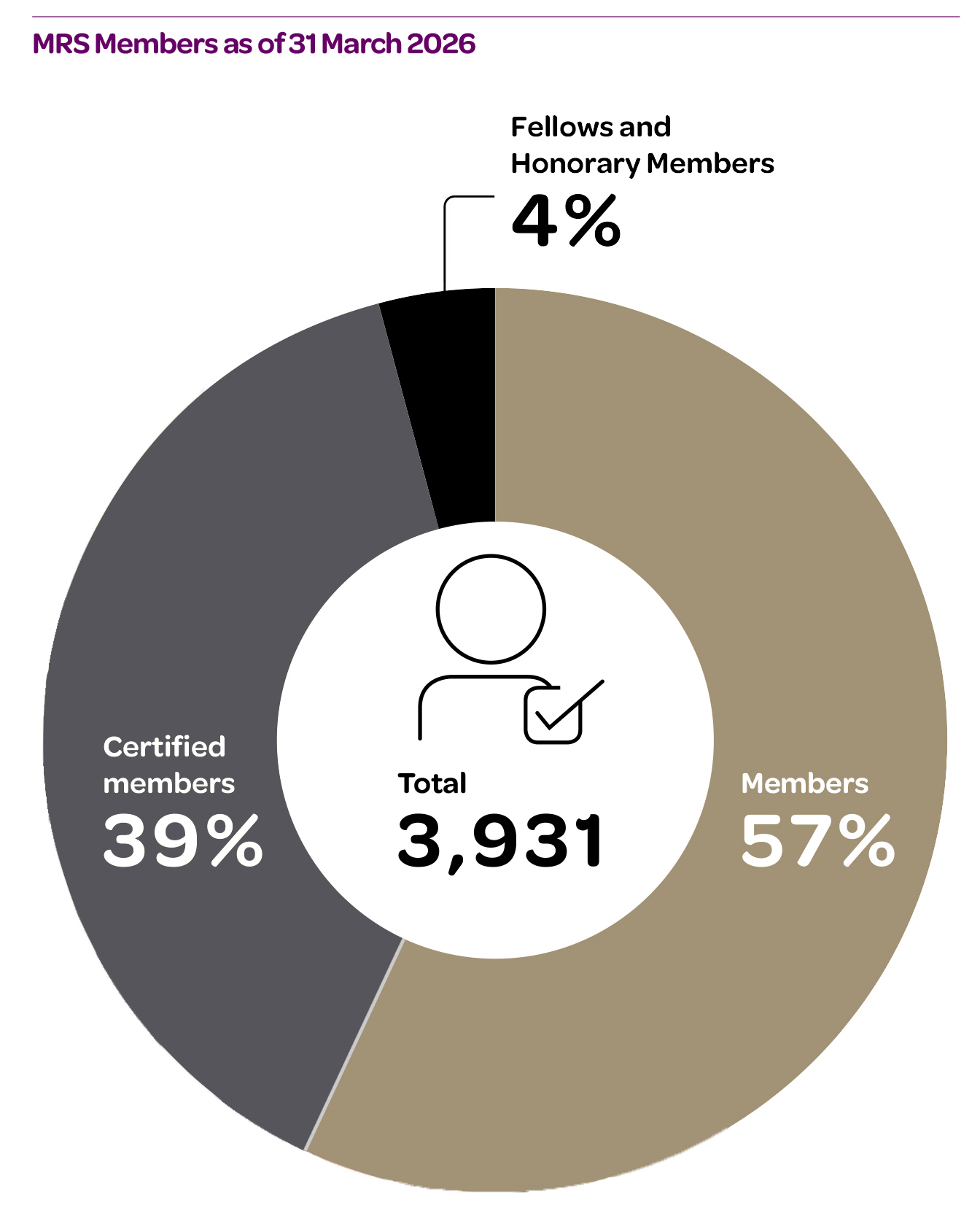
New courses were introduced on cuttingedge topics such as Advanced AI Techniques for Market Research, Synthetic Data: Pitfalls and Promises, AI-Powered Insight Videos Made Simple and AI Essentials for Creating Engaging Presentations.
20 bespoke in-company training courses were delivered during 2025/26 to organisations across the UK, including global brands, research agencies, charities, legal firms and academic institutions.MRS successfully expanded its client base in the charity, legal and higher education sectors, while continuing to build relationships with a number of returning clients.
The year saw an increase in face to face delivery, which accounted for around half of all programmes delivered. While online training continued to offer flexibility for organisations with geographically dispersed teams, many clients returned to classroom based learning to support collaboration, discussion and skills development. Teams participating in MRS training were often based across multiple locations and international markets, despite programmes being delivered within the UK.
MRS has a history of commercial and academic publishing, and it is renowned for the quality of its editorial content, which remains independent from the commercial arrangements of branded content, sponsored reports or display advertisements.
Publishing work produced by AI is strictly against MRS policy. However, it may be used as a tool in background work of researching topics, making MRS content findable in AI results and support efficiency measures like transcription of interviews.
The Research Live audience continues to grow and is the most international readership of all MRS platforms and publications, with more than 35,000 monthly active users, 34% from the US, 33% from the UK and the remaining from the rest of the world.
The editorial team have solidified their vision after the relaunch of the website in 2024 to refocus on people and careers and demonstrate the breadth of thinking and opinion across the sector. This can be seen for example in the How I Work series and Explainer series.
The annual Research Live Industry Report continues to be the most downloaded report produced by the MRS containing as it does the agency and consolidated businesses league tables. Over the summer, the Research Heroes programme celebrates the unsung heroes of the research sector and in 2025 15 individuals were awarded.
Display advertising continues to be popular with clients, coupled with an increase in branded articles and special reports.
The Delphi group comprises more than a dozen client and agency practitioners who collaborate on producing reports and content that addresses the most critical issues for the industry. In this period the group published two reports – Navigating Brand Purpose in an Age of Uncertainty, and The Gen Z Workforce.
The supplier guide lists over 300 research agencies on mrs.org.uk/researchbuyersguide and attracts 44,000 active users every year. The top 10 companies received over 6,000 users, and there was a 34% increase in users compared to the previous year, with a 15% increase in traffic from the US. 25% of all traffic is from Asia.
The International Journal of Market Research is published by Sage, on behalf of MRS. The journal received 401 manuscripts in 2025, a 14.9% increase from 2024. The two highest countries for submissions were India (105 submissions) and China (90 submissions). There were 34 institutional subscriptions and 8,437 package subscriptions.
MRS Company Partnership has continued to experience strong growth in the 2025–26 period, welcoming 45 new Company Partners. These included 20 agencies, 13 clients, and 12 specialist service providers. Of these, 13 were International Affiliates.
MRS’ client-side engagement continues to deepen with organisations such as Sage, Specsavers and Nationwide Building Society all becoming Company Partners. We have also continued to grow the number of agencies becoming Company Partners, including Clariti, Tracksuit and Censuswide. International Affiliates welcomed this year included Yesty, and Aston Martin F1. The new International Affiliates further expanded the geographic range of Company Partners to include China, Sweden and Netherlands.
This year, the Company Partner team continued to deliver its popular induction and refresher sessions for both new and renewing Company Partners, carrying out 47 sessions , up from 33 in the previous year.
The sessions are designed to provide an overview of MRS and its role within the market research and insight sector, highlighting our important relationships with UK, European and global governmental and non-governmental organisations. MRS also provide s a more detailed walkthrough of the benefits available through the Company Partner package and how employees can access them.
These sessions have generated valuable discussion and engagement between Company Partners and MRS. If your team would benefit from an induction or refresher session, please contact the Company Partner team. The table below outlines the number of registrations from Company Partner employees across the MRS activities and network events highlighted. Attendance at these sessions is included in all Company Partner packages and is available free of charge to all employees.
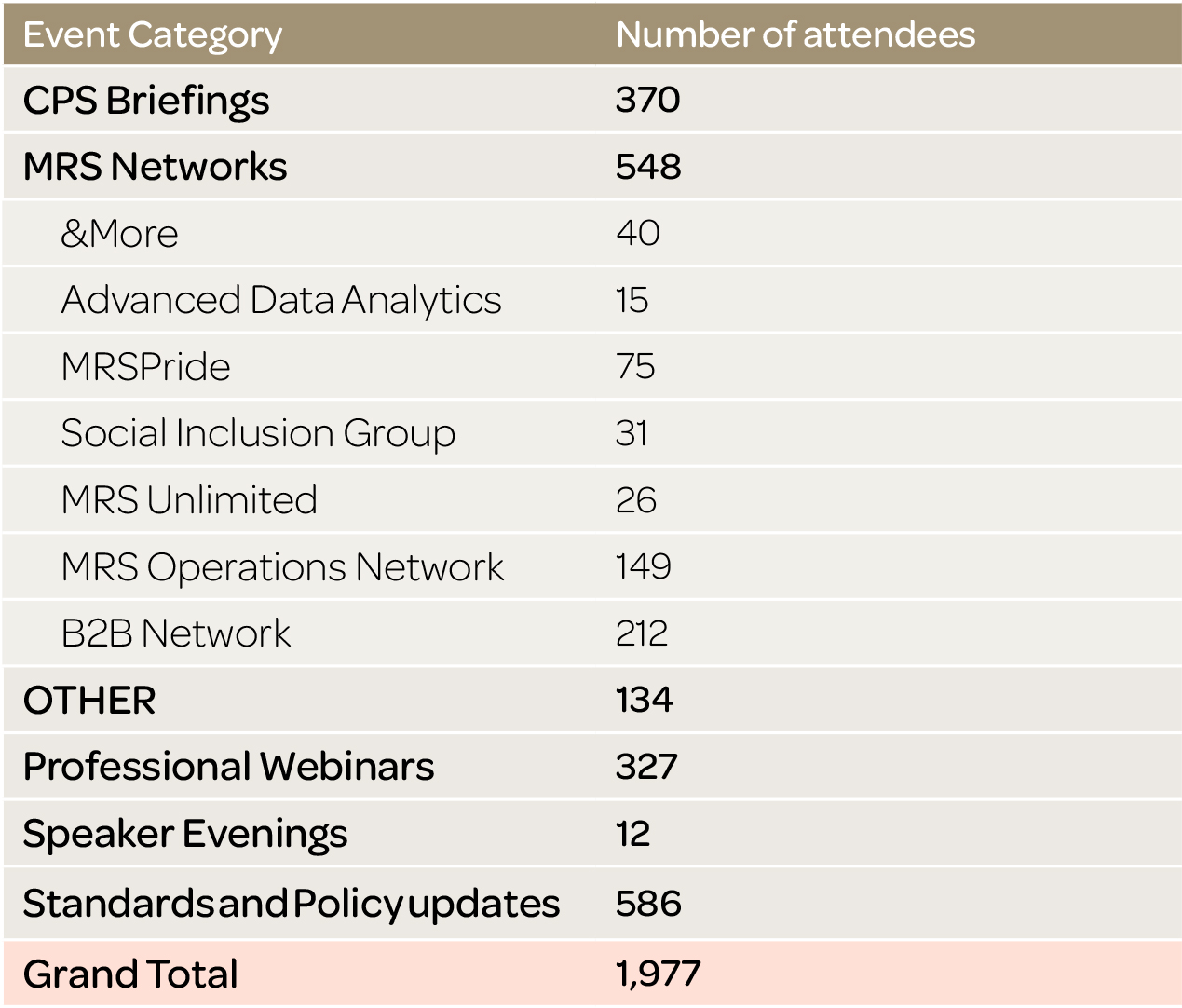
Increasingly popular this year has been MRS’social media welcome campaign for new Company Partners, where MRS has welcomed 34 through MRS social channels up from 31 the previous year. These introduce each new Company Partner to the wider MRS community, helping to raise awareness of the organisation s and celebrate their commitment to professional standards.
This year, the Company Partner team introduced an exclusive Company Partner Lounge at the MRS Annual Conference. The lounge welcomed a diverse mix of visitors, including representatives from a range of Accredited Company Partners, and provided a valuable space for networking, meetings, quiet working, speaker preparation and informal conversations throughout the event.
Since 2013 , the MRS Fair Data Trust Mark has been a reliable method for individuals to ensure that their data is being treated fairly. The Fair Data 12 principles were determined to be robust when compared against the Data (Use & Access) Act 2025. There are in total 52 accredited Fair Data companies, with 12 going through the process in this period.
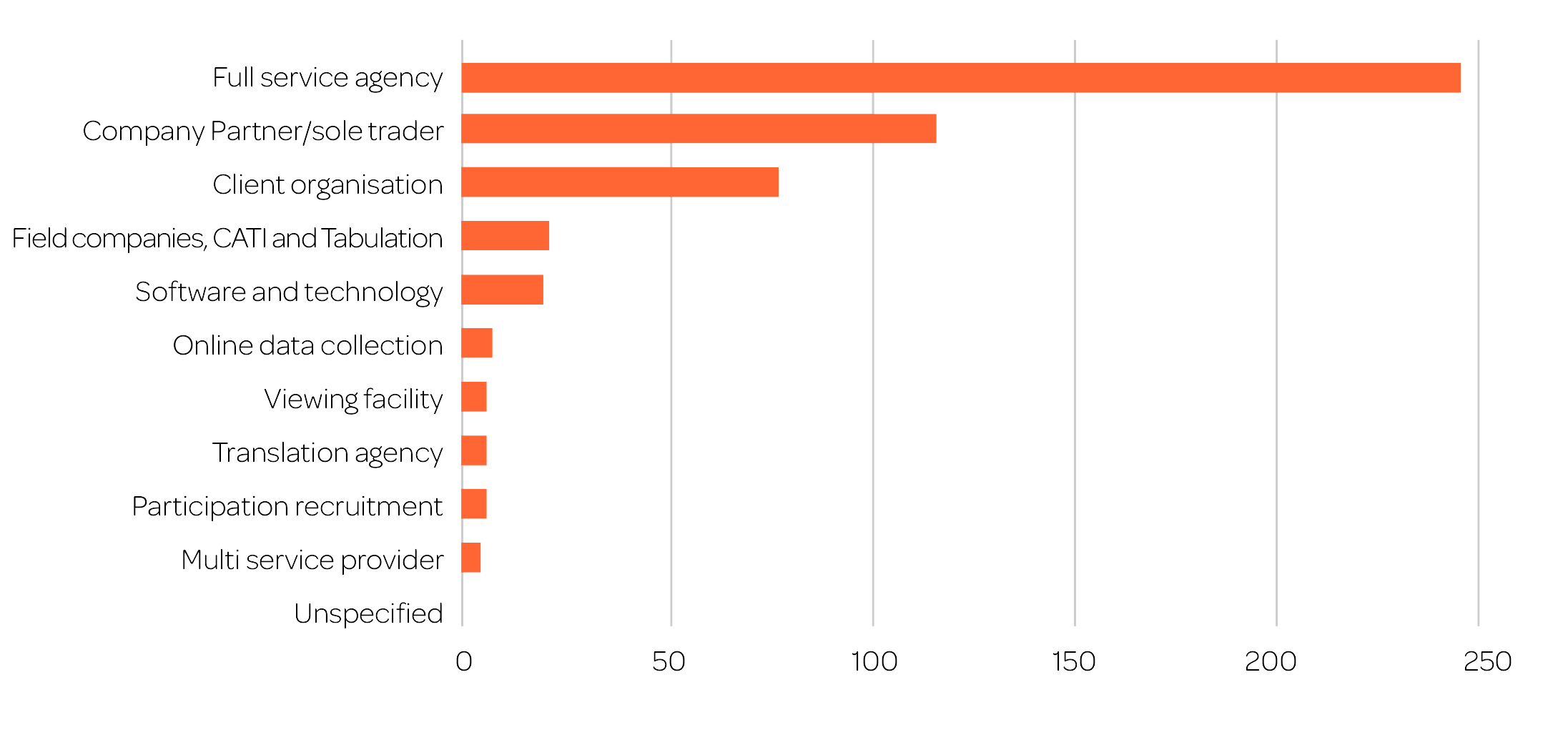
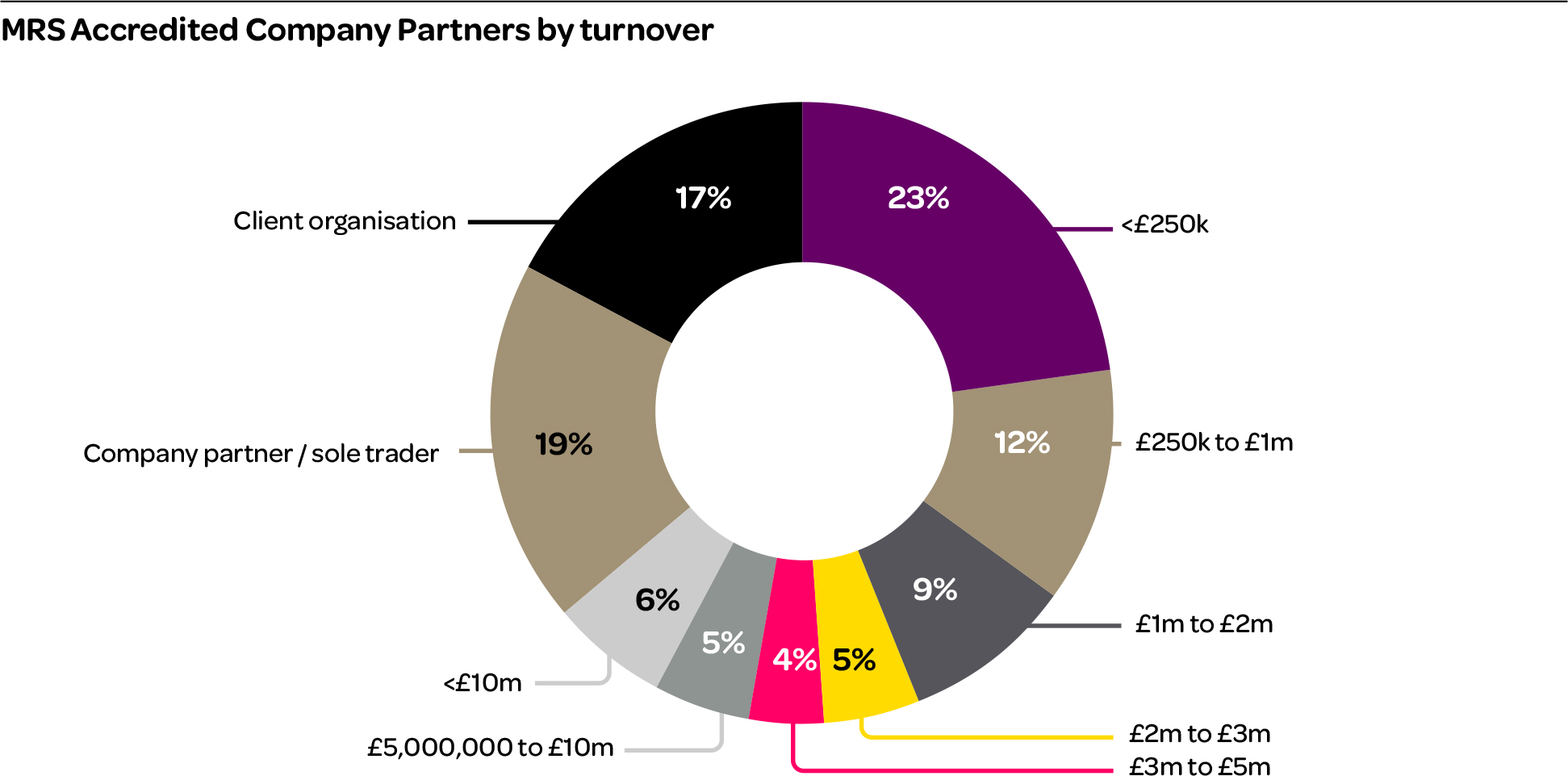
Below is the current breakdown of Company Partners by turnover*, of whom 39 are International Affiliates.
MRS Annual Conference 2026 – Research on the Edge took place on 10 March 2026. The event was hosted over one day with three streams of content. Keynote speakers included a panel session chaired by Dex Hunter-Torricke, Former Communications & Public Policy Advisor to Elon Musk (SpaceX) and a panel consisting of Kelly Beaver, CEO, Ipsos UK, Baroness Mattinson and Eliot Higgins, Bellingcat. The day was closed by international best-selling author, journalist, screen writer, podcaster and documentary film maker, Jon Ronson.
The event sold out, attracting over 650 participants across a diverse spread of practitioners: clients, suppliers, specialists, consultants, academics and the wider media.
Marking MRS’ 80th anniversary - championing the sector’s growth and the value of research to business leaders through profiling the Business of Evidence 2026 report in titles including More About Advertising, Decision Marketing and Performance Marketing World. Announcing the society’s high-profile new appointment of Baroness Deborah Mattinson as MRS President in sector titles like Performance Marketing World, MrWeb and Research Live.
Backing Census 2031 in the national media with commentary featuring in The Guardian, The Independent and The London Standard, emphasising the need for rich, consistent and reliable data on the population to provide a deeper understanding of people’s needs and better decisions from government and businesses.
Establishing MRS as an authority on synthetic data at a critical time of change for the sector. Providing guidance on its use in research and underscoring the continued importance of speaking to real people in Jane’s regular Marketing Week column, and explaining how synthetic data can support retail brands, if used well, in Business of Fashion.
Making a splash for the MRS Annual Conference 2026, showcasing the sector’s cuttingedge work. Getting journalists in the room to profile the event, the speakers and MRS members, landing articles in marketing and advertising titles such as Marketing Week, Little Black Book, MediaCat and WARC.
Showcasing the best of research through the MRS Awards 2026, bringing the winning entries to life in an engaging ceremony. Drumming up interest in the next awards show and profiling winners in the media and through voxpop videos on social media.
Building the reputation of MRS’ wider events programme and its speakers through articles in trade media read by research buyers for events which highlight how members are delivering value to their clients. These included a piece in Financial Services Forum about Nationwide and Verve’s session on social listening at the Storytelling Summit and a WARC feature on building brand loyalty and trust from Haleon and Ipsos’ talk at the B2B Research Conference.
Promoting for MRS’ Campaign for Better Data and its work to equip researchers with the skills and resources needed to improve standards across the sector and encourage responsible data practices. Bringing it to new audiences in Performance Marketing World and Decision Marketing, and through a programme of LinkedIn content.
Advocating the power of research in the public sector, urging policymakers to make evidence-based decisions amid pressure on the public purse in Government Business Magazine.
Contributing to Research Live’s 2025 Review and 2026 Preview series giving the MRS’ take on the hottest topics of conversation in the sector, from societal fragmentation to synthetic data, as well as the most significant pieces of research in 2025 and what the sector should be looking out for in 2026.
The following summary of key financial information is extracted from the audited accounts for the year 2025/26.
A copy of the statutory report and accounts which is submitted to Companies House is available to members on request.
Access all previous MRS annual reviews.


Our newsletters cover the latest MRS events, policy updates and research news.







©2026 The Market Research Society,
15 Northburgh Street, London, UK EC1V 0JR
Tel: +44 (0)20 7490 4911 Email: info@mrs.org.uk
The Market Research Society (MRS) is the world's leading research association. For all those who need, generate or interpret the evidence for making good business and policy decisions. Click here to find out more about us.
©2026 The Market Research Society,
15 Northburgh Street, London EC1V 0JR
Tel: +44 (0)20 7490 4911 Email: info@mrs.org.uk
